Why Japan faces so many earthquakes: 7.7 quake sparks Ring of Fire fears
Japan accounts for more than 20% of the world's earthquakes with a magnitude of 6 or higher
Published April 20, 2026
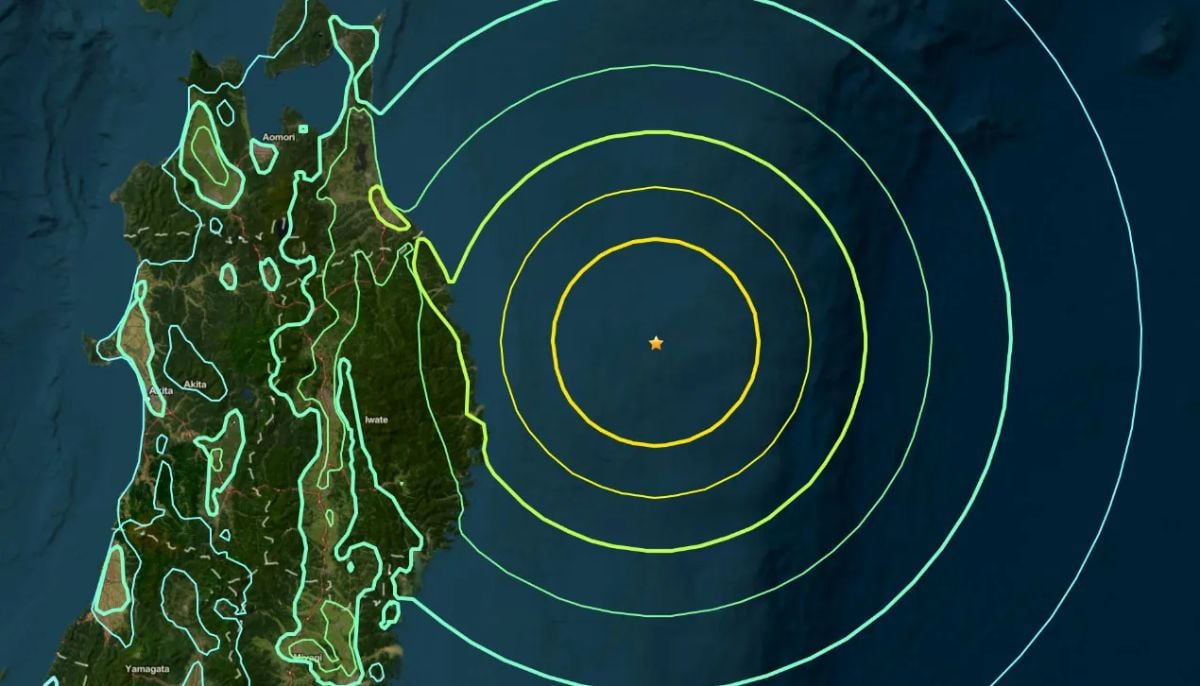
A magnitude 7.7 earthquake shook Japan on Monday, April 20, 2026, prompting authorities to issue a warning of 3-meter tsunami waves which was later lifted.
The undersea quake, recorded at a 10km depth, brought back the scary memories of the 2011 megaquake which killed more than 18,000 people. Fortunately, there have been no casualties reported so far.
Japan’s geography makes it prone to earthquakes and it experiences around 1,500 to 5,000 tremors every year.
Why do Japan get so many earthquakes?
According to the National Geographic Society, Japan is one of the most earthquake prone countries in the world because it is located on the western ridge of the Pacific Ring of Fire, an area famous for intense seismic activity because oceanic plates are forced beneath continental plates in a process called subduction.
The Japanese archipelago is wedged among four major tectonic plates, including
- Pacific Plate,
- Philippine Sea Plate,
- Eurasian Plate,
- North American Plate;
that are constantly shifting and sliding.
The earthquakes occur when an oceanic plate dives under a continental plate and becomes locked due to friction or in simpler words the heavy ocean floor tries to slide under the land.
Over the years, the friction causes the upper plate to compress and bend like a spring that builds immense geological stress and when the tension becomes too much, the continental plate or the land snaps back into its original place, causing earth to shake, which we earthquake.
According to NBC News, Japan accounts for more than 20% of the world's earthquakes with a magnitude of 6 or higher.
What has the Japanese government done to protect its citizens against these tremors?
The Japanese government has taken several key steps to protect its population from earthquakes. It has the strictest building codes in the world allowing it to build super-strong buildings.
The high-rise and other large buildings have rubber pads or shock absorbers in their frames thus preventing them from falling in case of earthquakes.
The government has also utilised technology to build the lightning-fast warning systems.
The advanced technology in Japan automatically stops bullet trains and elevators open their doors at the closest floor as soon as the tremors are detected.
TV and Radio broadcasters immediately switch to emergency modes, showing epicenters and quake arrival times.