Greenland ice is melting 63% more than historical pattern predicts: Here's why
Seven of ten worst Greenland melt events occurred this century, data show
Published May 08, 2026
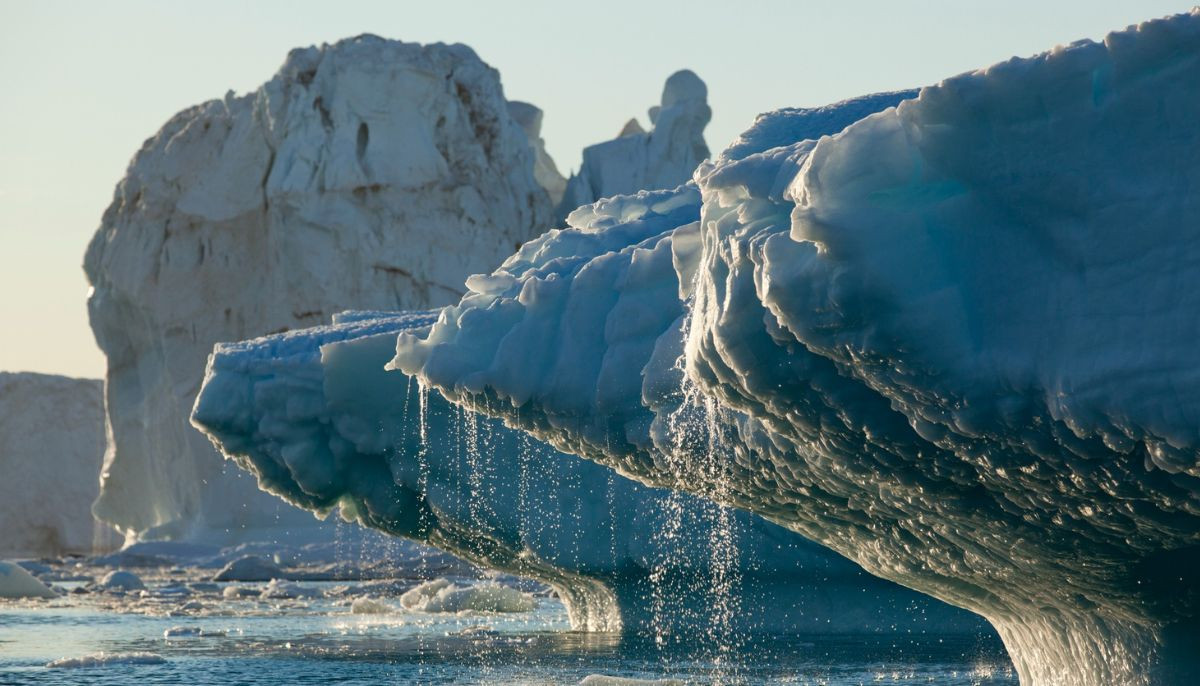
Greenland ice is melting at an extreme rate, with seven of the ten worst events on record occurring since 2000.
The study published in Nature Communications finds that the extreme melting events on the Greenland Ice Sheet have become significantly more frequent, widespread, and severe over the past three decades.
This causes meltwater production increases sixfold since 1990.
The researchers analysed catastrophic melting events from 1950 to 2023 using satellite observations and regional climate modeling.
The analysis revealed that the area affected by extreme melting increased by about 2.8 million square kilometers per decade, and melt water production increased from 12.7 gigatons per decade from 1950 to 2023 to 82.4 gigatons per decade after 1990.
Out of ten extreme melting events, seven occurred after 2000. This breaks records of devastating events of August 2012, July 2019, and July 2021.
In August 2023, the melting event lasted for 23 consecutive days.
Via “flow analog” methos, researchers distinguish the effects of atmospheric circulation patterns from warming-driven thermodynamic changes.
The researchers found that the meltwater production rose by 25% despite equal weather patterns as before. With all extreme weather phenomena considered, including those without any past analogues, the amplification grows to 63%.