What is ‘cold blob'? Mysterious Atlantic anomaly explained
‘Cold Blob’ in Atlantic points to alarming climate shift, study finds
Published June 15, 2026
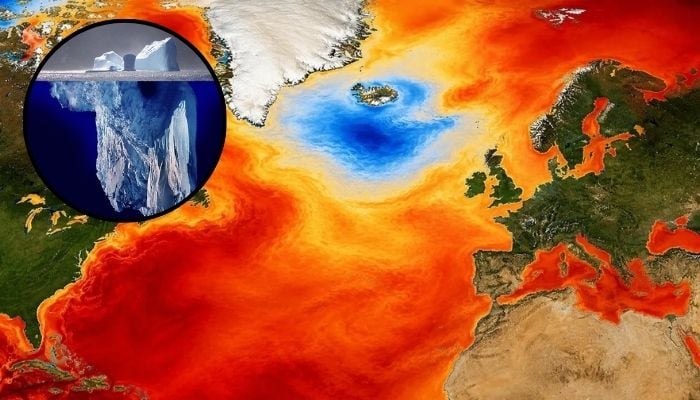
A mysterious patch of water in the North Atlantic, known as the “cold blob”, has cooled by nearly 1°C since 1900 while the rest of the ocean warms. A new study concludes this anomaly is not just a weather oddity but a dire warning that a critical ocean current system is weakening.
The vast cold stretch is located south of Greenland and Iceland. The research published in Geophysical Research Letters confirms that it is linked to a slowdown of the Atlantic Meridional Overturning Circulation (AMOC). AMOC is a vast conveyor belt that pulls warm water from the tropics to the Northern Hemisphere.
Using real-world data and climate models, researchers found that the cooling extends deep into the ocean, indicating that the phenomenon cannot be explained by atmospheric conditions such as winds alone.
Instead, it means that AMOC is transporting less heat northward.
The author of the study, Stefan Rahmstorf of Potsdam University, said, “It is changing ocean heat transport.”
The AMOC is reported to be weakening due to freshwater from melting ice in Greenland, disrupting the fine balance of salt and heat. If the AMOC were to break down entirely, the repercussions would include a rapid rise in sea levels along the United States coast and freezing temperatures across Europe.
The study authors further clarified that “the observed cooling trend can’t be explained by surface heat loss.”
While there are still many unanswered questions, the research clarifies that the planet is set to be hit by one of the most catastrophic events.