Trump refuses to sign historic housing bill: Here's real reason, what happens next
What's inside the 21st Century ROAD to Housing Act?
Published July 10, 2026

United States (U.S.) President Donald Trump has refused to sign the historic bipartisan housing bill which is set to become a law at midnight today.
The 47th POTUS revealed the reason for not signing the bill via a post on his own Truth Social platform. The 80-year-old Republican leader said he was withholding his signatures in protest because the Senate hasn't passed his separate elections bill, known as the SAVE America Act.
He wrote, “THE SAVE AMERICA ACT'S non-passage is CRAZY, and a serious threat to any politician who votes against it.”
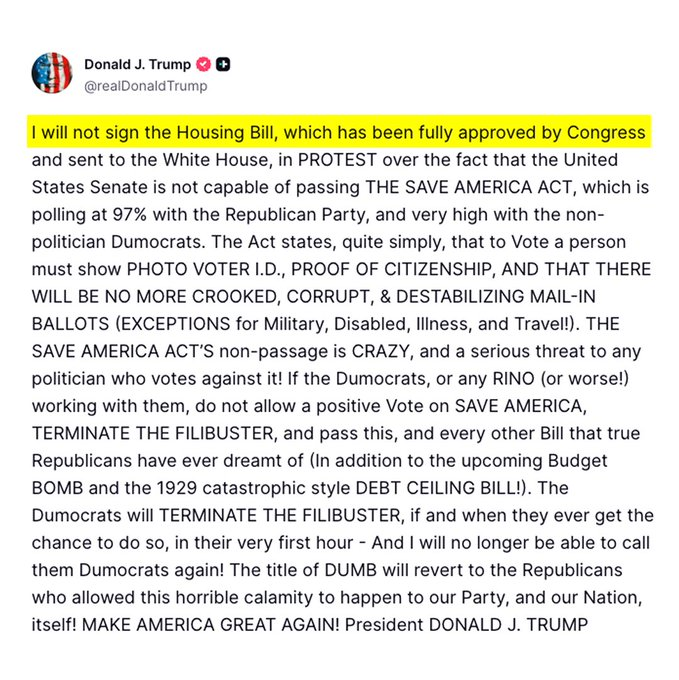
The biggest housing bill in decades was passed by Congress with overwhelming bipartisan support in June and a signing ceremony was planned in the Capitol Hill; however, Trump abruptly canceled that event, frustrated that Senate Republicans wouldn't prioritize his voting bill instead.
According to the U.S. Constitution, President Trump had only 10 days to sign or veto a bill once it reaches his desk. The president neither signed the bill nor vetoed it, meaning the housing bill will become a law at midnight.
What’s actually in the bill?
The proposed legislation is officially known as 21st Century ROAD to Housing Act and has over 50 provisions. Here are some of the most important provisions:
- A cap on big investors buying homes
The bill prohibits large institutional investors, mainly private equity firms, from buying more than 350 single-family homes.
- Faster permits and fewer building delays
It also takes care of the major hurdle which has slowed housing projects for years. The bill speeds up environmental reviews and provides incentives to the local government to approve more construction and looser zoning rules.
- Cheaper factory-built homes
It expands what counts as "manufactured housing," which supporters say could make factory-built homes cheaper and easier to mass-produce.