Trump's fuel economy rollback: Will this save drivers money or cost them more?
New fuel economy rules expected to keep gas-powered cars dominant longer
Published December 04, 2025
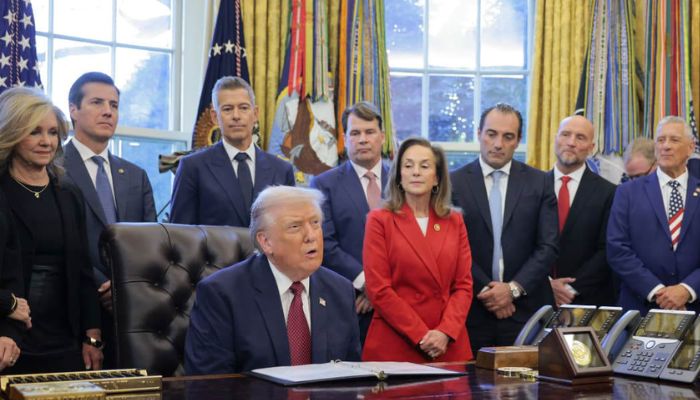
The Trump administration rolls out a major policy-reversal to weaken national fuel economy standards by loosening pressure on automakers to produce more efficient vehicles.
This reverses a key Biden-era climate initiative.
The announcement was made at a White House event with top auto executives.
It reverses the ambitious targets that were proposed to accelerate the transition to electric vehicles (EVs) and cut greenhouse gas emissions.
What are the key changes?
The Biden administration required automakers to enhance fuel efficiency by about 2% annually, targeting a fleet average of roughly 50 miles per gallon (mpg) by 2031.
The Trump administration’s latest rule suggests a 0.5% annual increase, aiming for an average of about 34.5 mpg by 2031.
The administration is eliminating a program that enables automakers such as Ford and GM to buy regulatory credits from companies such as Tesla that exceeded efficiency standards. Officials labeled this a subsidy that “artificially propped up the EV industry.”
The new rule also aligned with a broader anti-EV shift. This move is part of a sweeping pivot away from supporting electric vehicles.
The administration has already relaxed tailpipe emissions rules, eliminated federal EV purchase tax credits, and moved to block states such as California from setting their own zero-emission vehicle mandates.
What fuels this move?
The administration and supporting automakers argue the past standards were unrealistic and costly.
President Trump claimed that the rollback would save car buyers around $1,000 on the purchase price of a new vehicle by reducing technology mandates.
In view of this, CEO of Ford, Jim Farley, calls this a “victory of common sense” aligned with customer demand for larger, less efficient trucks and SUVs.
Major automakers players, especially those reliant on profitable trucks and SUVs arguing that the old rules were unworkable without a massive, uncertain shift to EVs.
How will this impact Americans?
The effects are deeply decisive, giving a trade-off between upfront costs and long-term expenses and environmental impact.
Potential impacted cited by supporter:
- The administration projects lower technology costs will make new cars, specially larger models, cheaper upfront.
- Less regulatory pressure could mean a continued wide availability of gasoline-powered trucks and SUVs which remain highly popular.
Potential impacts cited by critics:
- While a new car might be cheaper, owners will pay more at the pump. According to the National Highway Traffic Safety Administration (NHTSA), U.S. drivers could pay up to $185 billion more in fuel costs through 2050.
- This will also pose increased pollution and health risks. Transportation is the largest source of U.S. greenhouse gas emissions. Weaker standards mean more carbon dioxide and other pollutants. Environmental groups warn this worsens air quality threatening public health, particularly for children and the elderly.
What’s next?
The long-term impact will hinge on whether this move saves Americans money as promised or, as environmentalists contend, leads to higher costs and greater environmental damage for years to come.