Luxury, auto stocks slide as Trump ties Greenland purchase to new tariffs
Market retreat as Trump threatens up to 25% tariffs on Europe
Published January 19, 2026
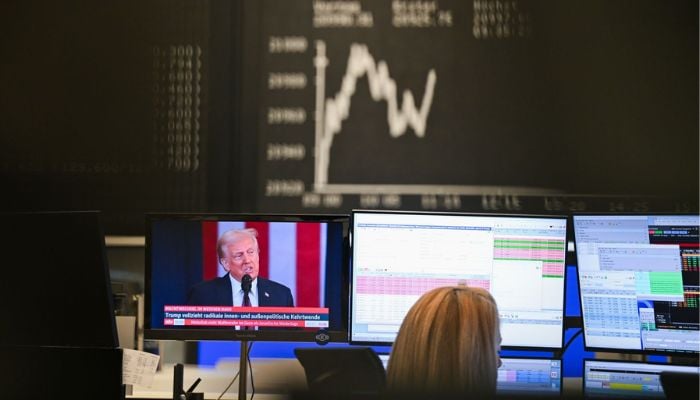
European markets opened lower on Monday, January 19, after U.S. President Donald Trump threatened tariffs on eight European countries amid rising trade tensions.
The pan-European STOXX 600 index dropped 1% in mid-morning trading, marking a dismal start for a week in which earnings statements and the World Economic Forum in Davos are expected to drive markets.
The French market's CAC 40 index declined by 1.4 per cent, the German market's DAX index fell 1.2 per cent, and the FTSE 100 in London closed lower by 0.5
On the same day, Trump announced that a 10% tariff will now be imposed on products from Denmark, Norway, Sweden, France, Germany, the Netherlands, Finland, and the UK, starting on Feb. 1.
However, the rate will increase to 25% on Jun. 1 unless a deal is reached allowing the US to buy Greenland.
Responding to the situation, European officials described the tariff threat as coercive and explored countermeasures, suggesting potential tariffs on $108 billion of U.S. imports and other actions under the EU’s Anti-Coercion Instrument.
Analysts noted that Trump's tariff strategy is more politically motivated than economic.
Shares of luxury, auto, and technology companies were among the sectoral decliners, falling 3.1%, 2.4%, and 2.2%, respectively, as the luxury and auto sector indexes hit a three-month low. Volatility in Eurozone equities also reached a high last seen in November.
Market analysts have noted that the absence of trading volume in the US markets in observance of the Martin Luther King Jr. Holiday could also lead to the amplification of these trends since declines were also registered in the futures of S&P 500, Nasdaq, EURO STOXX50, and DAX as investors turned their attention towards safe currencies such as the Japanese yen.
The market uncertainty was further fueled by global macroeconomic factors such as the slowdown in the economy in China and upcoming inflation data in the U.S. With earnings season already underway, investors are weighing risks along with economic indicators, making stocks highly susceptible to further market swings