Antarctic penguin breeding cycles shift rapidly as climate warms, study finds
Climate change forces Antarctic penguins to breed weeks earlier
Published January 20, 2026
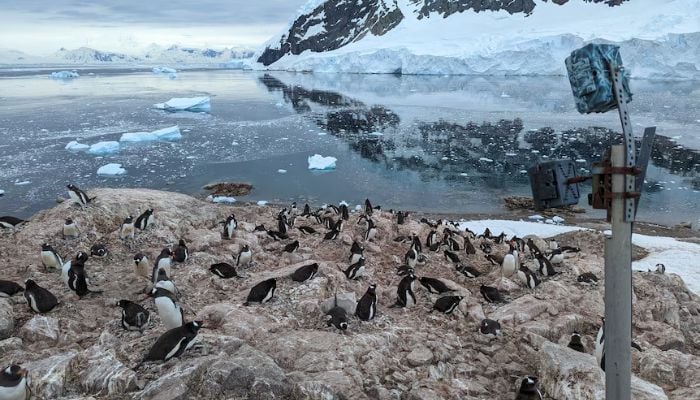
Climate change is impacting Antarctic penguins in the worst possible ways. Penguins across parts of Antarctica are forced to breed earlier than their usual time due to adverse global warming.
This is marked as the fastest recorded shift in breeding timing for any bird species and possibly any vertebrate.
According to the study published in the Journal of Animal Ecology, this is significant evidence of how rapidly climate change is reshaping polar ecosystems.
The results are derived from close evaluation of three penguin species, i.e., Adelie, Chinstrap, and Gentoo, across the Antarctic Peninsula and sub-Arctic islands.
Researchers from the University of Oxford and Oxford Brookes University used 77 time-lapse cameras at 37 colonies to track the start of breeding seasons between 2012 and 2022.
The results from the study show that the Adelie and Chinstrap penguins are now breeding about 10 days earlier than their average cycle, while Gentoo penguins are advancing their breeding by approximately 13 days.
The study also found that some colonies have started breeding as much as 24 days earlier than previously recorded cycles.
Lead researcher Dr Ignacio Juarez Martinez attributed these changes to the rising temperatures at the breeding sites of penguins.
The temperature at breeding sites is increasing at an average of 0.3 degrees Celsius per year. This is up to four times faster than the Antarctic average.
He stated: “Penguin colonies are some of the fastest-warming places on Earth.”
“This could lead to a species competition that was previously avoided, as both species bred at different times of the year,” the study continues.
This could give an advantage to Gentoos, who have a more flexible diet and feed closer to the breeding sites, putting further pressure on the Adélies and Chinstraps, who depend on krill.
Co-author of the research, Dr Fiona Jones, stated that the findings of the study raise concerns about long-term survival.
She said: “Penguins are a bellwether of climate change.”
She also warned that if the temperature keeps increasing at such a pace, it’s unclear how much more these species can adjust.
The study noted that future research should focus on continuous monitoring of these penguins to determine whether earlier breeding ultimately reduces chick survival and accelerates population declines in already vulnerable species.