Asteroid 2024 YR4 could trigger most powerful lunar impact in history, scientists warn
Astronomers prepare for possible strongest lunar impact from Asteroid 2025 YRF
Published January 29, 2026
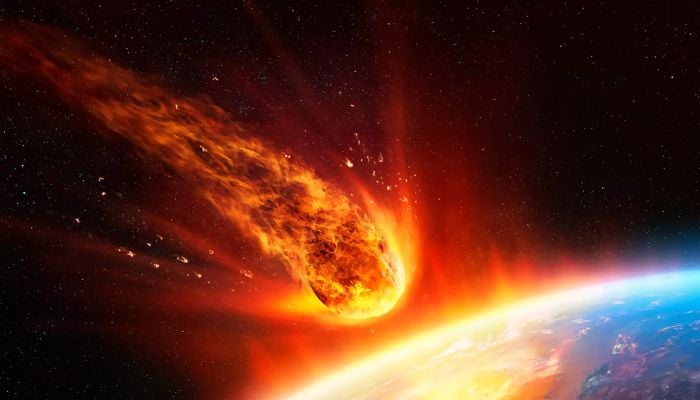
Scientists are continuously monitoring Asteroid YR4 after new research suggests it could have the most energetic lunar impact ever recorded in human history if it strikes the Moon in 2032.
While studies reveal that the probability is low, the possible impact can be both scientifically invaluable and potentially hazardous.
Asteroid 2024 YRF was discovered in December 2024 by the ATLAS telescope system in Chile. It is about 60 meters wide.
Earlier, scientists claimed that it may have impacts on Earth, but follow-up studies from NASA and data from the James Webb Space Telescope ruled that out.
The updated orbital model revealed that there’s 4% chance that the asteroid could collide with the Moon on December 22, 2032.
If the strike happens, scientists believe that it would release energy that would be equivalent to 6.5 megatons of TNT, which is much larger than any other impact that has been seen on the moon before.
Scientists believe that the strike would create a crater that would be about one kilometer wide and would cause a moonquake of magnitude 5.
The phenomenon may also result in the ejection of a large amount of material from the Moon into space.
This material may reach Earth, resulting in strong meteor showers visible across several continents.
Although the chances of the phenomenon posing a threat to people on Earth are low, there are concerns about the safety of satellites orbiting Earth.
Despite the dangers, scientists believe the potential effect offers a “once-in-a-generation” research opportunity.
The observations could provide a unique glimpse into the physics of impact, the Moon's geology, and its internal structure.
Infrared telescopes, such as the James Webb Space Telescope, could observe the cooling of molten rock, while seismometers could analyze the passage of shock waves through the Moon.