February's full ‘snow Moon' peaks Sunday night
Published February 01, 2026
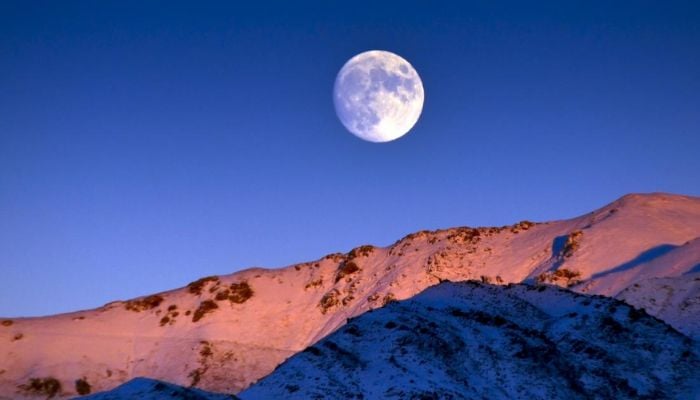
February’s full moon, also known as the “Snow Moon”, is glowing up in the evening sky.
National Aeronautics and Space Administration (NASA) reports that the moon will be in its full illumination on Sunday, February 1, at 5:09 p.m.
It will appear fullest while low on the eastern horizon near sunset, creating a striking, bright orange spectacle.
The Moon will still appear nearly full on Saturday, January 31, 2026 and Monday, February 2 evenings.
The origin of the name “Snow Moon” comes from the heavy snowfall that was traditionally prevalent in North America during the month of February, a tradition recorded by the Farmers’ Almanack.
In some tribes, it is also called the Sleet Moon, Wind Moon, and Crow Moon.
The Moon will be visible with the naked eye. However, you can use a telescope or binoculars to get a clearer view.
NASA’s chief of Planetary Geology, Geophysics, and Geochemistry Laboratory stated, “Go out and look at it when it’s full, when it’s partially full, and learn its geography.”
The Snow Moon unlocks the full roster of full moons of 2026 with slightly bigger supermoons at the end of the year (November and December).
Beyond the full Moon, astronomers expect a complete lunar eclipse in the U.S. on March 3. The lunar eclipse is referred to as a “blood moon.”