Artemis II: Why NASA is returning to Moon after five decades?
NASA’s first crewed Moon mission since 1972, Artemis II, prepares for April launch
Published March 28, 2026
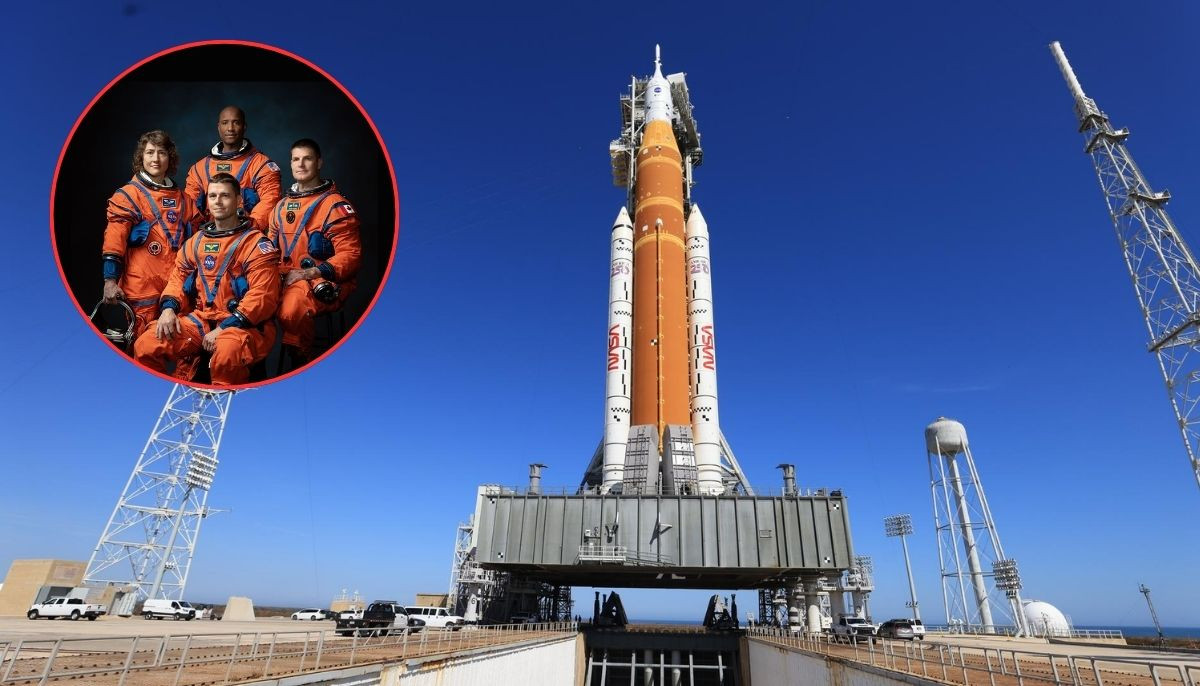
The National Aeronautics and Space Administration (NASA)’s first crewed Moon mission in 53 years is being prepared for launch.
The crew gears up for a historic 10-day journey.
But there have been speculations about why NASA is finally sending humans back toward the Moon after more than five decades.
This is because of a significant space exploration strategy.
On contrary to previous crewed missions, Apollo, which was driven by Cold War competition, the Artemis II program aims at sustainability, scientific discovery, and deep-space exploration.
NASA has scheduled the launch of Artemis II for April 1.
The crew consists of four astronauts on a 10-day lunar flyby aboard NASA’s Orion spacecraft, lifted by a massive Space Launch System (SLS) rocket.
The five-decade hiatus was influenced by shifting political interests and budgetary constraints, along with a focus on low-Earth orbit activities with the Space Shuttle and ISS programs. Yet today, a variety of factors have reignited the interest in going back to the Moon.
The scientific discovery remains a core driver of the mission. The scientists consider the water discovery at the lunar south pole highly significant as it can be harvested for drinking water, oxygen, and even rocket fuel.
Secondly, the Moon now serves as a proving ground for Mars. NASA views Artemis as the critical stepping stone for future crewed missions to the Red Planet.
Testing the life support equipment, habitats, and navigation in deep space near the Moon will enable engineers to test these technologies before they undertake the much more challenging mission to Mars.
The four astronauts, Commander Reid Wiseman, Pilot Victor Glover, Mission Specialist Christina Koch, and Hansen, arrived at the Kennedy Space Center on Friday for the final preparation of the mission.
Koch will make history by becoming the first woman to travel to the Moon's vicinity, while Glover will also make history by becoming the first Black man to travel to the Moon's vicinity.
After Artemis II, NASA plans for a lunar landing as early as 2028, with the eventual goal os establishing a permanent lunar base.