Pete Hegseth impeachment articles: Everything you need to know
The seven-page impeachment resolution introduced by Rep. Yassamin Ansari
Published April 15, 2026
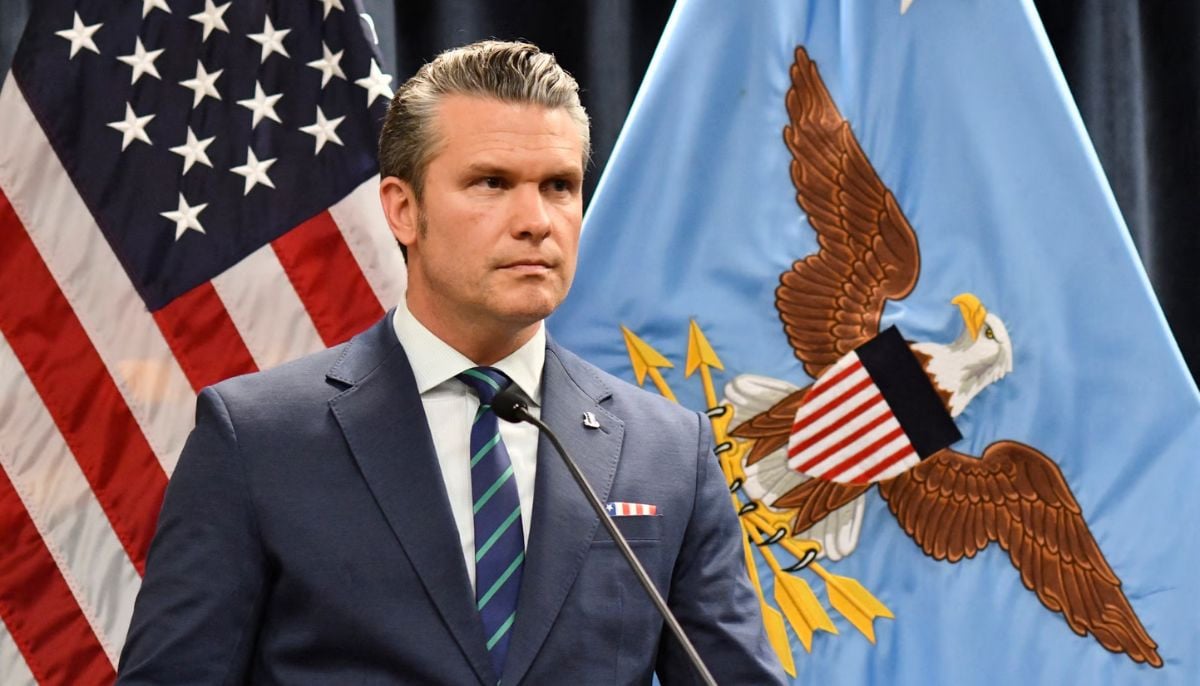
United States (U.S.) Department of War Secretary Pete Hegseth has found himself in hot waters after the Democrats in Congress announced to introduce at least five impeachment articles against the Pentagon chief.
House Democrats accused Secretary Hegseth of abuse of power, war crimes and other serious wrongdoings amid the ongoing U.S.-Iran war.
Though the move has no chance of passing in Congress, the apparently symbolic move suggests that Democrats have identified their new target in President Trump’s administration, which has already seen some big overhauls.
Earlier, the president removed border patrol official Gregory Bovino from immigration enforcement operations after severe criticism over the deaths of two U.S. citizens involving two federal agents. He later ousted the Department of Homeland Security (DHS) Secretary Kristi Noem, followed by removal of the Attorney General Pam Bondi.
Speaking with Axios, the Pentagon Press Secretary Kingsley Wilson defended Hegseth, saying, “This is just another attempt by Democrats to stay in headlines as the Department of War continues to achieve substantial objectives in the U.S. war against Iran.”
She also reiterated Secretary Hegseth’s motto of “Peace Through Strength,” adding that he will continue to protect the homeland.
The seven-page impeachment resolution introduced by Rep. Yassamin Ansari has eight co-sponsors, including Reps. Steve Cohen (D-Tenn.), Jasmine Crockett (D-Texas), Nikema Williams (D-Ga.), Dina Titus (D-Nev.), David Min (D-Calif.), Shri Thanedar (D-Mich.), Brittany Pettersen (D-Colo.) and Sarah McBride (D-Del.).
The resolution focuses on Pentagon's operations against Iran, alleged leaked Signal chat (also known as SignalGate) and Hegseth’s personal misconduct.
Following are the five impeachment articles brought against Secretary Hegseth by House Democrats:
Article 1: Unauthorized War and Risk to U.S. Forces
The first article accuses Pete Hegseth of authorizing military strikes against Iran without seeking approval from Congress. Lawmakers argue that this decision bypassed constitutional checks on war powers.
It also claims that Hegseth approved plans that placed U.S. troops at unnecessary risk, including discussions around potential ground operations in Iran. Critics say such decisions could have endangered American personnel and strategic interests.
Article 2: Alleged Violations of the Laws of War
The second article focuses on alleged violations of the Law of Armed Conflict. It claims Hegseth either approved, failed to prevent, or did not adequately respond to operations that resulted in civilian casualties and damage to civilian infrastructure in Iran.
Among the incidents cited is the reported bombing of a girls’ school in Minab, as well as allegations of “double-tap” strikes on suspected targets in the Caribbean.
The article also references Hegseth’s past remarks suggesting a “no mercy” approach toward enemies, arguing that such rhetoric raises concerns about compliance with international law, including the Geneva Conventions.
Article 3: Mishandling of Sensitive Information
The third article centers on the so-called “Signalgate” controversy. In this incident, journalist Jeff Goldberg was mistakenly added to a private Signal group chat where senior U.S. officials, including Hegseth, were reportedly discussing military operations in Yemen.
The article alleges that this incident reflects serious negligence in handling classified or sensitive military information, potentially putting U.S. personnel and operations at risk.
Article 4: Obstruction of Congressional Oversight
The fourth article accuses Hegseth of failing to cooperate fully with Congress. Lawmakers claim he did not provide timely or complete information about military operations.
It further alleges that key details, particularly regarding civilian casualties and operational conduct in Iran, Venezuela, and other regions, were withheld, limiting Congress’s ability to exercise oversight.
Article 5: Conduct Undermining Public Trust
The final article argues that Hegseth’s actions have damaged public confidence in the U.S. military and the Department of Defense.
It claims he acted in ways that undermined trust in the institution, pointing to controversial policy positions during the Trump administration, including criticism of NATO and changes to diversity and inclusion policies within the military.
Critics say these actions, combined with broader controversies, have raised concerns about leadership and the reputation of the armed forces.