Why St George's Day is barely celebrated compared to St Patrick's Day?
Published April 23, 2026
While millions across the world turn rivers green and flood the streets in celebration every March for St. Patrick's Day, England’s national day, St George's Day, passes each year with far less fanfare.
England observes its National day, St George’s Day on April 23 every year to honour the patrol saint of England. Yet, unlike its Irish counterpart, it rarely sparks large-scale global celebrations.
Cities like Chicago famously dye their river green, while global landmarks light up in Irish colours. Parades, music festivals and packed pubs have turned St. Patrick’s Day into an international cultural phenomenon.
By comparison, St George’s Day is mostly marked by:
- Small local events
- Community fairs
- Occasional flag displays
Even in London, celebrations tend to be modest.
Unlike Ireland, England has often struggled to define a modern national identity that feels inclusive to all.
Public displays of English nationalism can sometimes be viewed as politically sensitive, which has limited widespread celebration.
Ireland has successfully exported its culture worldwide, from music to pubs to diaspora communities, St. Patrick's Day became a global brand, something England never fully replicated with St George’s Day.
St. Patrick’s Day benefits from strong commercial backing, bars, tourism boards, and governments all promote it heavily, whereas, St George’s Day lacks that same level of coordinated promotion.
St George’s Day has no universal symbols like green attire or widely adopted rituals that encourage participation.
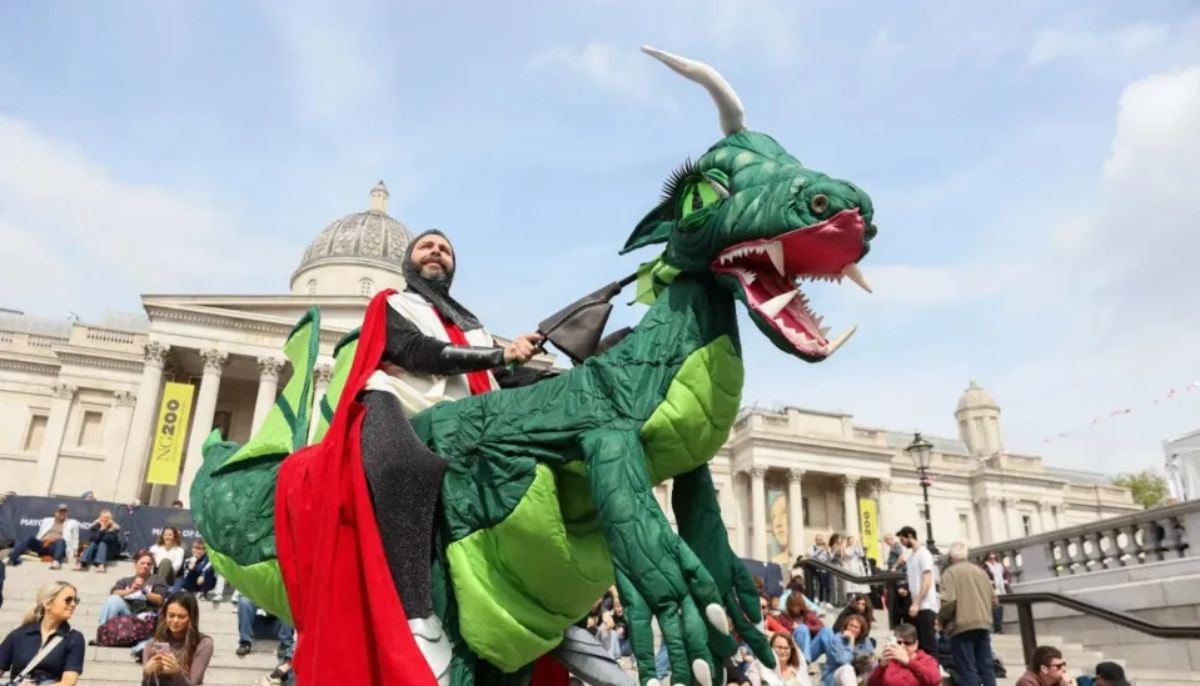
Who was Saint George?
Saint George is best known for the legend of slaying a dragon, a story symbolising courage and the triumph of good over evil.
While St George's Day remains symbolically important, it lacks the global energy, commercial backing, and cultural export power that transformed St. Patrick's Day into a worldwide celebration.
England’s national day remains one of the most understated national celebrations in the world.