Air pollution crisis: Moorland burning risks lives of 2.3 million in UK
Moorland burning exposes millions to air pollution, study finds
Published May 19, 2026
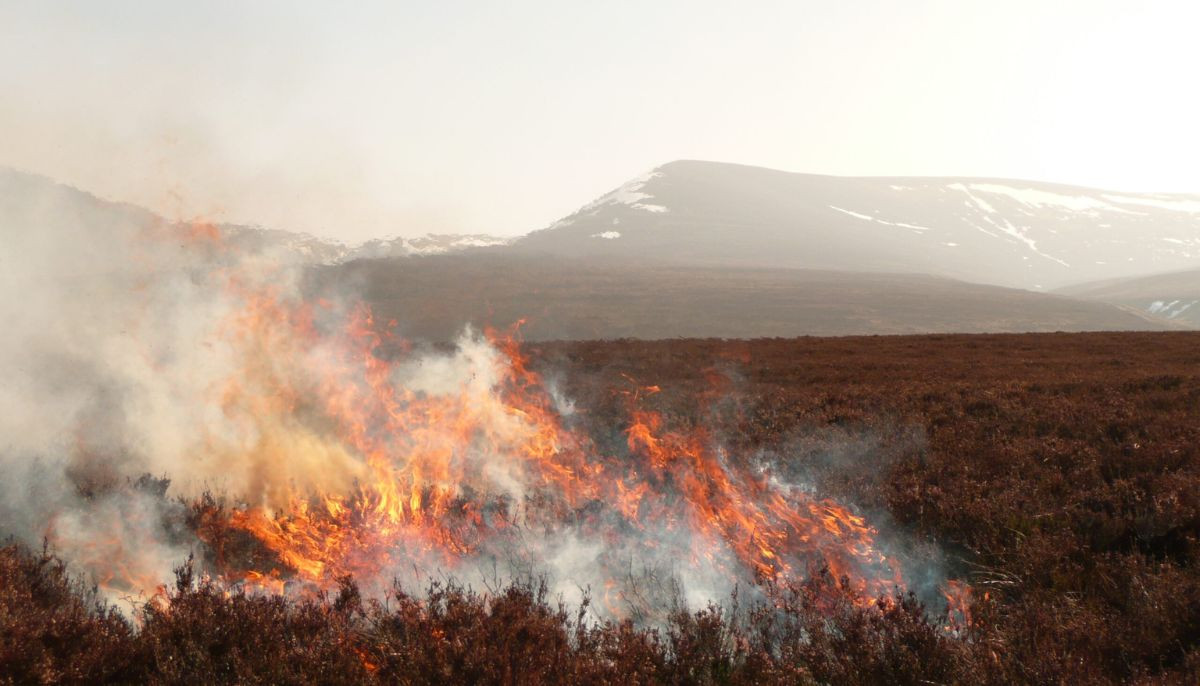
Routine burning of Moorland is putting millions of people across the UK at unsafe levels of air pollution.
The research conducted by the University of Leeds and the RSPB reveals that the burning of moorland causes an increase in the concentration of particles of PM2.5, which are very small to penetrate deeply into the lungs.
In total, an estimated additional 550,000 people experience hazardous pollution because of the burning. During peak hours, this number jumps to 2.3 million people.
The lead author of the research, Dr Ailish Graham, stated: “Until now, prescribed moorland burning has been seen as a local air quality issue. Our results show that prescribed burning can increase PM2.5 concentrations across much larger regions.”
The primary aim of the burning is to encourage fresh heather growth for grouse, which is then shot for sport.
However, the practice receives criticism from environmental groups who claim that it devastates precious peatland habitats that are necessary for wildlife and carbon storage.
In the wake of new legislation introduced in Scotland, the RSPB has urged the British government to establish a licensing scheme to oversee grouse moors in England.
According to campaigners, urgent action is required to safeguard both human health and the environment due to the fact that people have been breathing polluted air because of fires set mainly for sport.