Taylor Swift files to trademark her voice to fight AI Deepfakes: Here's how it works
The applications provide Swift with additional legal grounds to challenge unauthorised AI-generated content
Published April 28, 2026
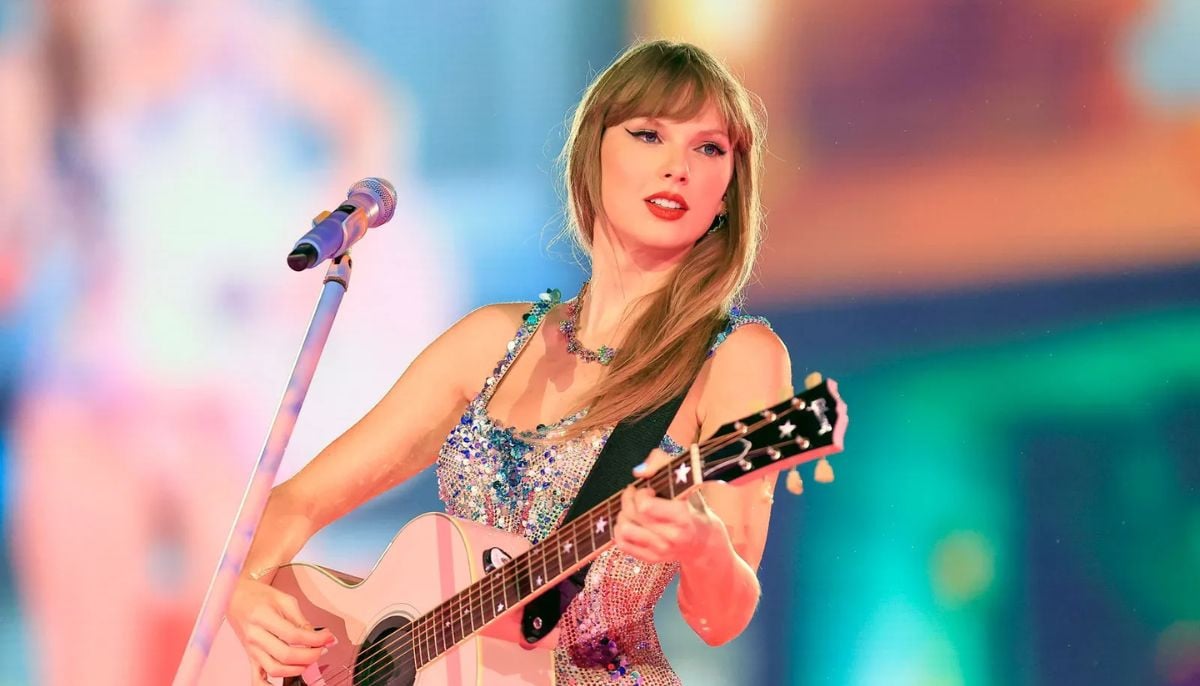
Taylor Swift has filed trademark applications to protect her voice and likeness, in what legal experts say is a direct response to the growing threat of artificial intelligence deepfakes.
The songstress’s company, TAS Rights Management, submitted three applications to the US Patent and Trademark Office on April 24, 2026.
Two cover the sound of her voice saying "Hey, it's Taylor Swift" and "Hey, it's Taylor."
The third protects a specific image of the pop star holding a pink guitar during her record-breaking Eras Tour, dressed in a multicoloured bodysuit with silver accents and boots.
Intellectual Property Attorney Josh Gerben said that these filing would give the singing sensation additional legal grounds to challenge unauthorised AI-generated content using her voice and image.
In his blog post, Gerben wrote, “Theoretically, if a lawsuit were to be filed over an AI using Swift's voice, she could claim that any use of her voice that sounds like the registered trademark violates her trademark rights.”
It is pertinent to note that Gerben is not representing Swift legally.
Swift's likeness has previously been misused without her consent on multiple occasions. AI-generated pornographic images of the singer circulated widely online. In the lead-up to the 2024 U.S. presidential election, Donald Trump shared AI-generated images falsely suggesting she had endorsed him.
Unlike copyright or state right-of-publicity laws, which carry significant limitations, federal trademark protections apply nationwide and allow cases to be filed in federal court, making them a potentially stronger deterrent against misuse.
Swift is not the first celebrity to pursue this strategy. In December 2025, the US Patent and Trademark Office granted actor Matthew McConaughey a trademark on his famous "Alright, alright, alright" catchphrase, along with several audio and video clips of himself.