University of Minnesota researchers create world's first synthetic cell with a complete life cycle
Adamala and partners have announced plans to launch a research organisation called Biotic
Published July 03, 2026
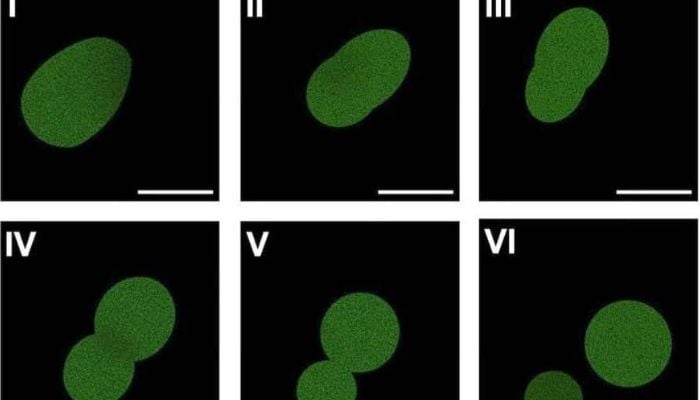
Scientists at the University of Minnesota have built the first synthetic cell that can carry out a full life cycle using only non-living chemical ingredients. The artificially created tiny cell, also known as SpudCell, can grow, feed, copy its genetic material and divide to produce new cells without starting from any existing living organism.
Associate Professors Kate Adamala and Aaron Engelhart in the College of Biological Sciences were at the helm of this breakthrough.
The development marks the first time researchers have been able to assemble a complete set of cell-like behaviors from the ground up in a chemically defined system.
Speaking about this achievement, Adamala said: “This is likely the most exciting project I’ve ever worked on. We’ve replicated in chemistry what only used to be possible in biology: the complete set of behaviors of a cell.”
She continued, “It proves that the most fundamental functions of life, like growth and replication, do not need a mysterious magical spark.”
SpudCell is made inside microscopic lipid spheres, the same fatty molecules that form natural cell membranes.
Following the scientific advancement, Adamala and partners have announced plans to launch Biotic, a new public-benefit research organization with an aim to create shared standards and open tools so other labs can build on this work instead of starting from scratch each time.