Astronauts capture first-ever x-rays in space: Here's what it means for future
New space x-ray tech could save astronauts on lunar voyages
Published July 15, 2026
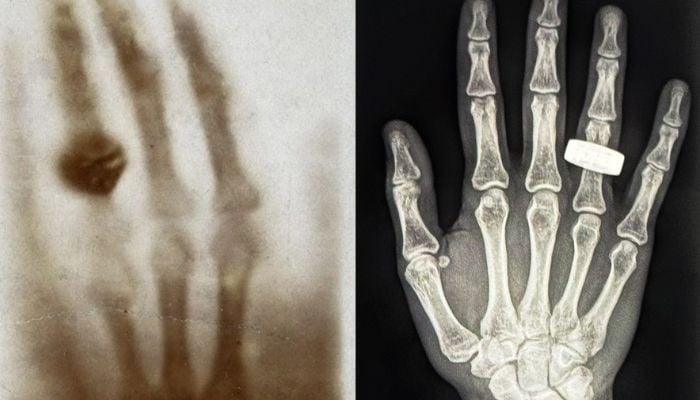
Astronauts have finally taken diagnostic-quality X-rays while in orbit, marking a pivotal moment for space medicine and future lunar missions.
The historic achievement was made during SpaceX’s Fram2 mission in March 2025, when four civilian astronauts aboard a Crew Dragon capsule used an ultraportable wireless digital X-ray generator to scan their hands, forearms, chests, abdomens, and pelvises.
The result of the discovery has been published in the journal Radiology, which indicated the in-flight images are comparable in quality to those taken on Earth.
Unlike conventional X-ray machines, which are bulky, consume considerable energy, and generate unclear images if there is movement on the subject’s part, new portable machines are small and quick enough to cope with microgravity conditions. The Fram2 crew was trained for only four hours before flying and managed to use the device by themselves.
The innovation arrives at a time when human space missions have started preparing for prolonged stays on the Moon and beyond to Mars. It will become an essential tool for assessing any kind of fracture and internal injury during long-distance travel where evacuation back to Earth is not possible.
In addition to its applications in medicine, it may also be employed to examine space vehicle electronics and suits and other critical mission equipment for any hidden problems. In fact, the scientists observed that portable X-ray devices may revolutionise medicine in far-flung places on Earth.
Upon the mission’s return, the X-ray generator sustained only superficial damage, showcasing its ruggedness. For the future, researchers aim to develop even smaller, more robotic systems for future space exploration.