Chris Hemsworth discusses decision to reveal Alzheimer's predisposition
Chris Hemsworth went public with Alzheimer's predisposition in 2022
Published February 05, 2026
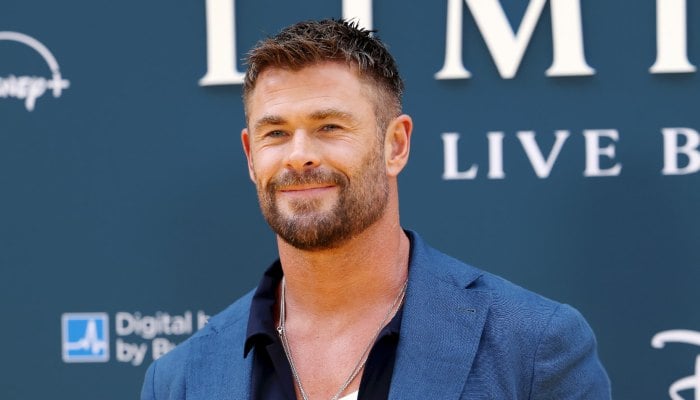
Chris Hemsworth has opened up about why he chose to publicly share that he has a genetic predisposition to Alzheimer’s disease, admitting he wrestled with whether being so open might change how people see him as an actor.
Speaking to The Guardian during the press tour for his upcoming film Crime 101, the Marvel star explained that the decision did not come easily, particularly given his long-standing image as an action hero.
“I wondered if I was letting people too far in,” Hemsworth said.
“Are they no longer going to believe in the action star or the Marvel character? And do I want people to know my fears and insecurities to this level?”
Hemsworth first revealed the news in 2022 on an episode of his Disney+ series Limitless, where a doctor told him his genetic makeup includes two copies of the APOE4 gene.
Think of the APOE4 gene as a specific version of a "blueprint" for a protein that manages fats and cholesterol in your body.
We all inherit two copies of the APOE gene, one from each parent, but the "4" variant is essentially like having a slightly less efficient cleanup crew in your brain.
While its main job is moving fats around, it is also responsible for clearing out a sticky "gunk" called amyloid that can build up and lead to Alzheimer’s.
Having one or two copies of this version increases your statistical risk of developing the disease, but it is definitely not a guaranteed diagnosis.
Plenty of people carry the gene and stay sharp well into their 90s, especially when healthy lifestyle habits are in the mix, so it’s best viewed as a "heads-up" from your DNA rather than a final verdict.
At the time, he stressed that the gene was not a certainty, explaining that “it’s not like I’ve been handed my resignation” and that while it is a strong indicator, it is not pre-deterministic.
The subject has become even more personal for the actor in recent years.
His grandfather was diagnosed with Alzheimer’s, and last November Hemsworth revealed that his father is currently living with the disease.
That reality, he said, has changed how he looks at both life and work.
“My appetite for racing forward has really been reined in,” he told The Guardian.
“I’ve become more aware of the fragility of things. You start thinking, ‘My dad won’t be here for ever.’ And my kids are now 11 and 13. Those nights where they’d fight over sleeping in our bed, suddenly they’re not happening any more.”
As a result, Hemsworth said he is slowing down professionally and choosing projects for more personal reasons.
In the past, he admitted, financial considerations often played a bigger role. He recalled thinking, “I came from nothing. Who am I to turn down that kind of money?” and justifying decisions by focusing on how the work could help support his wider family.
That shift in priorities was reflected in his 2025 documentary A Road Trip to Remember, which focused on his father’s Alzheimer’s diagnosis.
Hemsworth described the film as deeply emotional, saying it “was so deeply personal. It was a love letter to my father. It empowered him for a period, and stimulated memories that were being taken away from him.”