What is FISA? Everything to know about Section 702 expiring April 20
House Votes to extend warrantless surveillance law for 10 days after late-night revolt
Published April 17, 2026
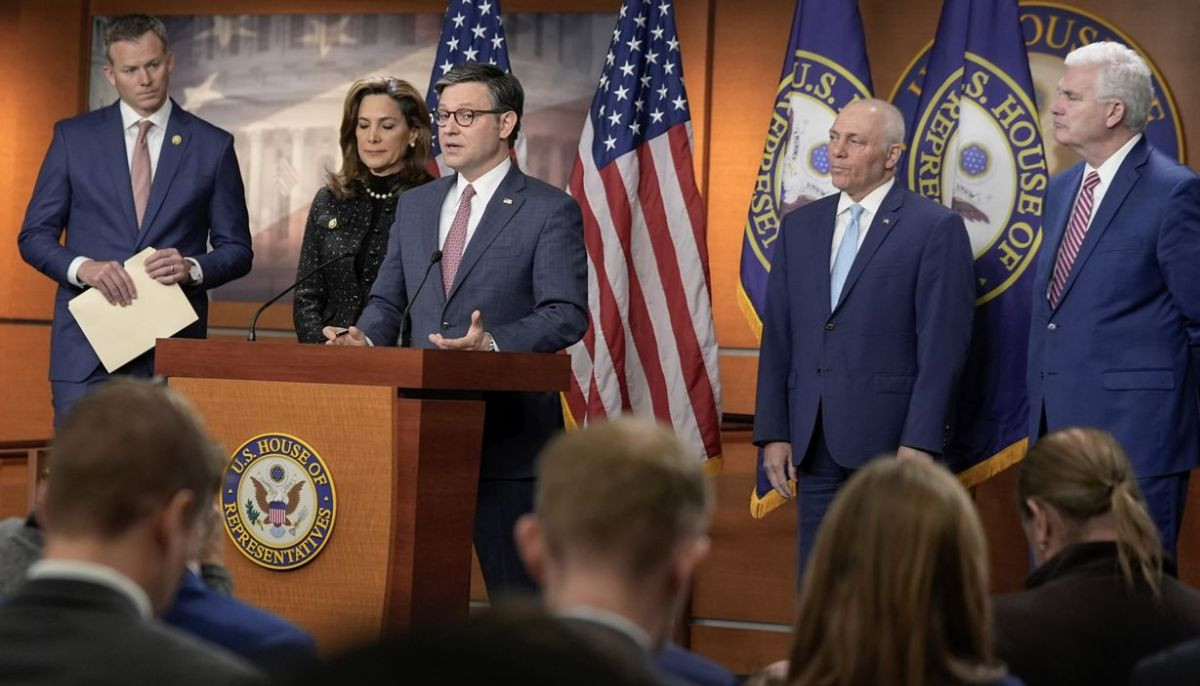
The House of Representatives voted early Friday, April 17, to temporarily extend a controversial warrantless surveillance program by April 30.
This follows a late-night revolt by libertarian-leaning Republicans that derailed U.S. President Donald Trump’s push for a longer-term renewal.
Foreign Intelligence Surveillance Act (FISA) is a 1978 U.S. federal law that sets the procedures for physical and electronic surveillance of foreign intelligence agents within the United States.
Section 702 of the FISA Act provides the U.S. government with authority to conduct serious surveillance without a warrant on non-U.S. persons located outside the U.S. to collect foreign intelligence.
In simple terms, according to Section 702, the CIA, NSA, FBI, and other intelligence agencies are allowed to conduct monitoring of communications in foreign lands, which includes communication between Americans and their foreign counterparts.
Although intended for foreign nationals, it often snags Americans’ communications, enabling organizations such as the FBI and the NSA to search through Americans’ emails and documents without a warrant.
Section 702 of the Foreign Intelligence Surveillance Act (FISA) was temporarily fixed with a voice vote at two in the morning. The Senate will likely address this bill as soon as Monday, just a few hours prior to the act’s expiration.
Initially, GOP leaders attempted to approve a five-year extension, then an 18-month renewal. However, both of them failed.
Even 20 Republicans joined most Democrats in restricting the longer extension, forcing Speaker Mike Johnson to scramble for a compromise.
Previously, Trump also raised an agenda to “KILL FISA.” However, this week he reversed his statement and urged Republicans to unify for a clean extension.
While posting on Truth Social, he wrote: “I am willing to risk giving up The my Rights and Privileges as a Citizen for our Great Military and Country.”