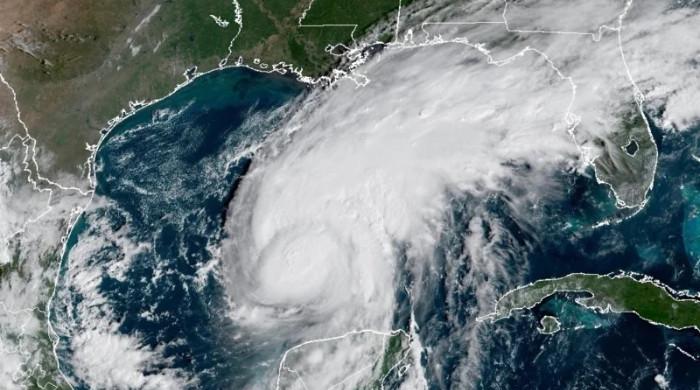
What's causing repeated earthquakes in Pacific Ring of Fire? Japan hit by 5.5, Philippines by 6.2
Magnitude 5.5 earthquake jolts Tokyo and surrounding regions as seismic activity intensifies along volatile tectonic belt
Published June 16, 2026
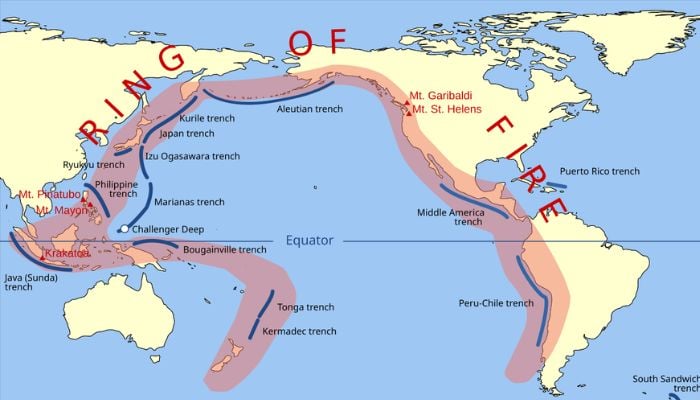
The Pacific Ring of Fire, the most seismically active region on Earth, is struck by repeated earthquakes over the past 24 hours.
This raises concerns among scientists and emergency officials across the Asia-Pacific.
On Tuesday, June 16, a magnitude 5.5 earthquake jolted Tokyo and surrounding areas at around 7:45 p.m. (local time).
Japan’s meteorological agency reported that the epicenter was located in the southern Ibaraki Prefecture, with strong shaking recorded in Gunma and Saitama prefectures.
However, there’s no tsunami threat is reported so far. Additionally, the initial assessment indicates no major casualties or damage.
Hours earlier, the Philippines was also jolted by a powerful 6.2 earthquake, following a catastrophic 7.8 tremor that had already rattled the archipelago. The repeated quakes have left communities on edge and disaster response teams on high alert across the region.
Why is this happening?
The Pacific Ring of Fire is an area that measures 40,000 kilometers and is in the shape of a horseshoe. It is characterized by geological activities such as the convergence, collision, and subduction of tectonic plates. Tectonic plates like the Pacific, Philippine Sea, and Eurasian plates experience convergent activities leading to high levels of earthquakes and volcanic eruptions.
Recent tremors occurring within this area show the level of stress that has been accumulated at many fault lines. Tremors are being experienced due to the subduction of the Philippine Sea plate under the Eurasian plate. Scientists are tracking these incidents to determine if they constitute a larger seismic event.
Which regions can be next?
Based on the historic trends and the Pacific Ring of Fire’s tectonic activity, the following regions can be next:
- Indonesia (Sumatra and Java)
- Taiwan
- Chile and Peru (South America)
- Alaska and Aleutian Islands (USA)
- Mexico and Central America
- New Zealand
- Kamchatka Peninsula and Kuril Islands
Seismologists stressed that earthquakes cannot be precisely predicted and the recent activity does not necessarily mean another quake is imminent in a specific region.