June Bootids 2026: Complete guide to peak timing, visibility, what to expect
June Bootids, most unpredictable meteor shower, peaks this week
Published June 22, 2026
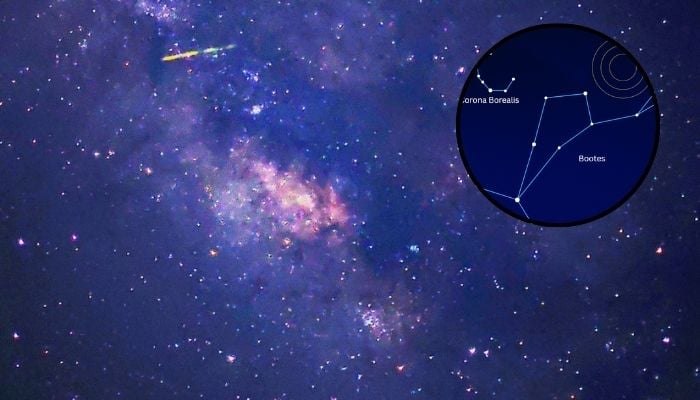
The June Bootids, a meteor shower happening every year between June 22 and July 2, is set to peak around June 27 this year.
While most of the meteor showers show predictable patterns, Bootids are known for their surprising outbursts.
What’s new this year
As of now, forecasts indicate a little unusual activity with a weak annual maximum predicted for June 22. According to the International Meteor Organisation, the debris trails responsible for the 1998 and 2004 displays are not currently in Earth’s path.
History of June Bootids
In 1998, skywatchers witnessed an extraordinary outburst of up to 100 meteors per hour, with elevated activity lasting over seven hours. A similar burst was also experienced in 2004 when 20-50 meteors were seen per hour.
Less meteor activity was also experienced with fewer than 10 meteors per hour in 2010.
What causes the Bootids?
The phenomenon occurs when Earth passes through debris left behind by comet 7P/Pons-Winnecke, which orbits the Sun every six years. As fragments of the comet’s trail enter the atmosphere, they burn at 18km per second.
This is much slower than the Leonids’ 70km/s, creating long, gentle streaks rather than rapid flashes.
How to watch a meteor shower with the naked eye?
For the best chances of spotting a June Bootid:
- Find a dark location away from city lights.
- Allow your eyes 20 mins to adjust to darkness.
- Look toward the constellation Bootes, high in the western and southwestern sky.
- Scan a broad area rather than staring directly at the radiant.
The short summer nights around the solstice limit viewing time, but clear skies across many regions this week offer hope for dedicated observers willing to take the gamble.